
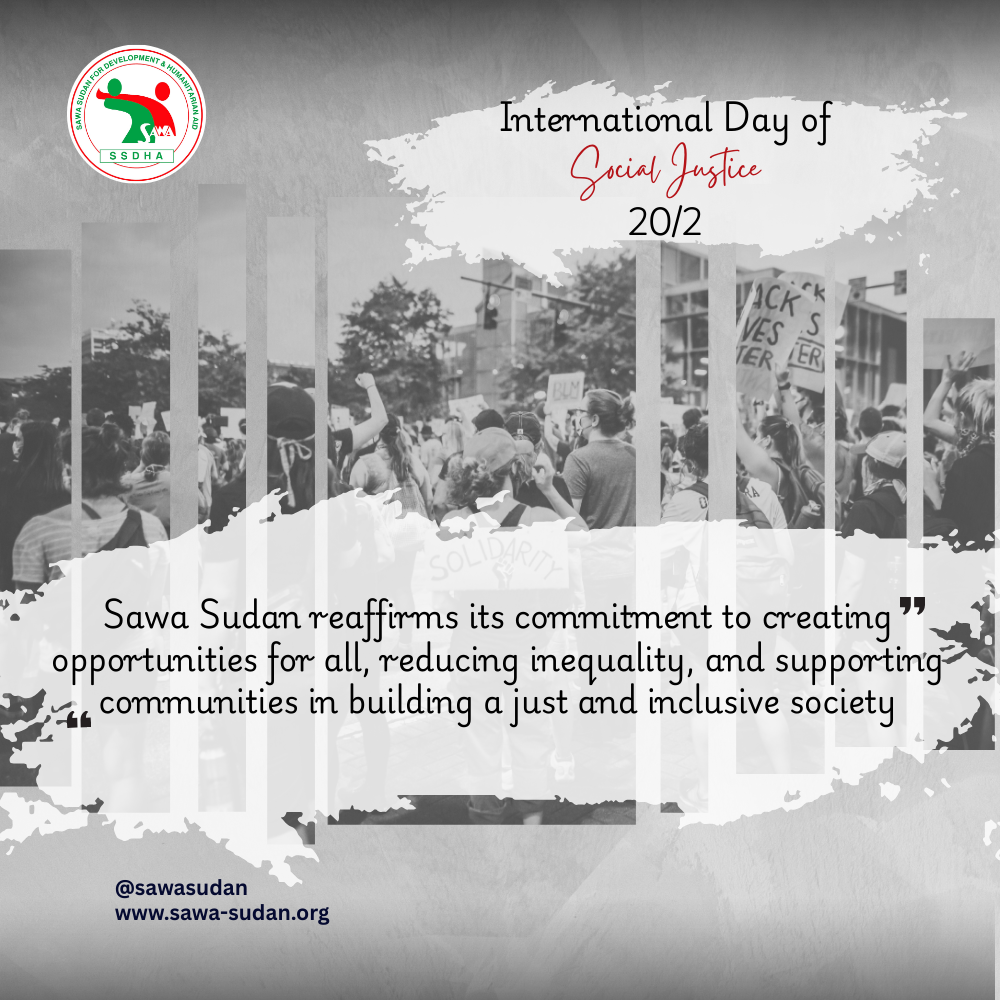
On February 20 each year, the international community observes the World Day of Social Justice, an occasion proclaimed by the United Nations General Assembly to promote awareness of the importance of establishing the values of justice, fairness, and equality among all peoples and societies. This day serves as an important reminder that sustainable development cannot be achieved unless it is inclusive and equitable, ensuring every individual the right to live in dignity, free from discrimination based on gender, race, religion, or social origin.
Social justice is defined as the ethical and political framework that guarantees equal opportunities for all in accessing education, decent work, and healthcare, as well as the fair and equitable distribution of national resources and wealth. It also requires protecting and empowering the most vulnerable and marginalized groups in society through effective mechanisms that enable them to overcome economic and social challenges. Social justice seeks to reduce the gap between social classes, combat poverty and unemployment, and strengthen the values of solidarity and social cohesion that form the foundation of any stable and united society. It is well established that societies grounded in social justice foster a sense of security and belonging among their members, encourage creativity and contribution, and enhance their ability to actively participate in nation-building and comprehensive development.
Commemorating the World Day of Social Justice is not merely symbolic; rather, it is a clear call for serious action and practical measures at the local, regional, and international levels.
